 VGarage

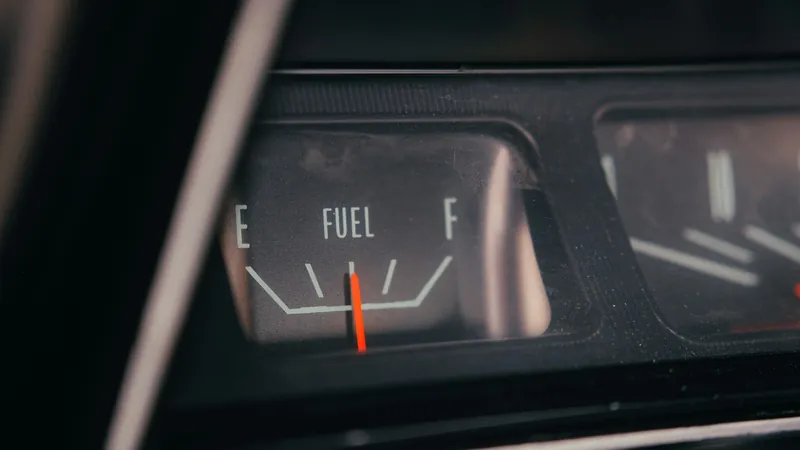
km/L, L/100 km and MPG all measure the same thing, the other way round or in different units. To convert: L/100 km = 100 ÷ km/L, and km/L = 100 ÷ L/100 km. For US miles per gallon, US MPG = km/L × 2.352, or 235.2 ÷ L/100 km. For UK (imperial) miles per gallon, UK MPG = km/L × 2.825, or 282.5 ÷ L/100 km. So 12.5 km/L is 8.0 L/100 km, about 29.4 US MPG and 35.3 UK MPG. Below: where each unit comes from, worked examples, and why one of them is better for comparing cars.
The short version
- km/L and US or UK MPG: distance per fuel. Bigger is better.
- L/100 km: fuel per distance. Smaller is better.
- Between km/L and L/100 km, just divide 100 by the number.
- US and UK MPG differ because the gallons do. A UK gallon is about 20% bigger.
Three units, two ideas
There are really two ways to describe fuel economy:
- How far one unit of fuel takes you: km/L (common in the Philippines, Japan and much of Asia) and miles per gallon (the US, and the UK alongside litres at the pump).
- How much fuel a set distance takes: L/100 km (Europe, Australia, Canada and most spec sheets).
Both are worked out from the same two numbers you get at the pump, the distance since your last full fill and the fuel it took. See how to calculate fuel consumption for the method.
The formulas
The exact factors come from the definitions of the units: a mile is exactly 1.609344 km, a US gallon is 3.785 L, and a UK (imperial) gallon is exactly 4.54609 L. That gives:
- km/L to L/100 km: 100 ÷ km/L
- L/100 km to km/L: 100 ÷ L/100 km
- km/L to US MPG: km/L × 2.352
- US MPG to km/L: US MPG × 0.4251
- L/100 km to US MPG (and back): 235.215 ÷ the number
- km/L to UK MPG: km/L × 2.825
- UK MPG to km/L: UK MPG × 0.3540
- L/100 km to UK MPG (and back): 282.481 ÷ the number
- US MPG to UK MPG: × 1.201. UK to US: × 0.8327.
The 235.215 for US MPG is the figure the US National Institute of Standards and Technology gives. Notice that L/100 km to MPG and MPG to L/100 km use the same division: the conversion works both ways.
Worked examples
A small sedan at 12.5 km/L
- L/100 km: 100 ÷ 12.5 = 8.0 L/100 km
- US MPG: 12.5 × 2.352 = 29.4 US MPG
- UK MPG: 12.5 × 2.825 = 35.3 UK MPG
A US review says 30 MPG
- km/L: 30 × 0.4251 = 12.8 km/L
- L/100 km: 235.215 ÷ 30 = 7.8 L/100 km
A European spec sheet says 6.0 L/100 km
- km/L: 100 ÷ 6.0 = 16.7 km/L
- US MPG: 235.215 ÷ 6.0 = 39.2 US MPG
- UK MPG: 282.481 ÷ 6.0 = 47.1 UK MPG
A quick reference
- 8 km/L = 12.5 L/100 km = 18.8 US MPG = 22.6 UK MPG
- 10 km/L = 10.0 L/100 km = 23.5 US MPG = 28.2 UK MPG
- 12 km/L = 8.3 L/100 km = 28.2 US MPG = 33.9 UK MPG
- 15 km/L = 6.7 L/100 km = 35.3 US MPG = 42.4 UK MPG
- 20 km/L = 5.0 L/100 km = 47.0 US MPG = 56.5 UK MPG
- 25 km/L = 4.0 L/100 km = 58.8 US MPG = 70.6 UK MPG

Why L/100 km is better for comparing
km/L and MPG hide something. Because they're "distance per fuel", the same improvement in the number saves very different amounts of fuel depending on where you start. Over 1,000 km:
- Going from 5 to 6 km/L cuts fuel from 200 L to 167 L. That saves about 33 L.
- Going from 20 to 25 km/L cuts fuel from 50 L to 40 L. That saves 10 L.
The second jump looks five times bigger, but saves less than a third as much fuel. In L/100 km the picture is honest: 20 to 16.7 is a drop of 3.3, while 5 to 4 is a drop of 1. If you're choosing between two cars, or deciding whether replacing an old thirsty van is worth it, convert to L/100 km first. Fuel used is what you pay for.
The same idea for EVs
Electric cars use the same two ideas. km/kWh is distance per energy (bigger is better), and kWh/100 km is energy per distance (smaller is better). Convert with 100 ÷ the number: 6.5 km/kWh is about 15.4 kWh/100 km. US sources sometimes use MPGe, which compares energy to the energy in a gallon of petrol; it's useful for comparing EVs to each other on US labels, but km/kWh is simpler for your own driving. More in EV or hybrid running costs.
Common mistakes
- Mixing US and UK MPG. A British 50 MPG is about 41.6 US MPG. Check which gallon a source uses.
- Averaging km/L figures directly. Average the totals instead: total km ÷ total litres. Averaging per-tank km/L figures gives short tanks too much weight.
- Comparing improvements in km/L. Convert to L/100 km to see the fuel actually saved.
- Rounding too early. Keep a decimal or two until the end.
Track it with VGarage
VGarage shows fuel economy as km/L or L/100 km, whichever you prefer, and EV efficiency as km/kWh. Choose the one you like in your preferences. A plug-in hybrid keeps fuel and charging side by side, each with its own figure.
Moving from an app that used miles and gallons? VGarage's import converts distances and volumes to your units, and the check screen lets you confirm which units a file used. See the import guide and the VGarage FAQ.
Track it with VGarage
VGarage keeps every fill-up, service and cost for all your cars on iPhone: scan the pump and the receipt, get service reminders by date or odometer, and see what each car really costs to run.