 VGarage

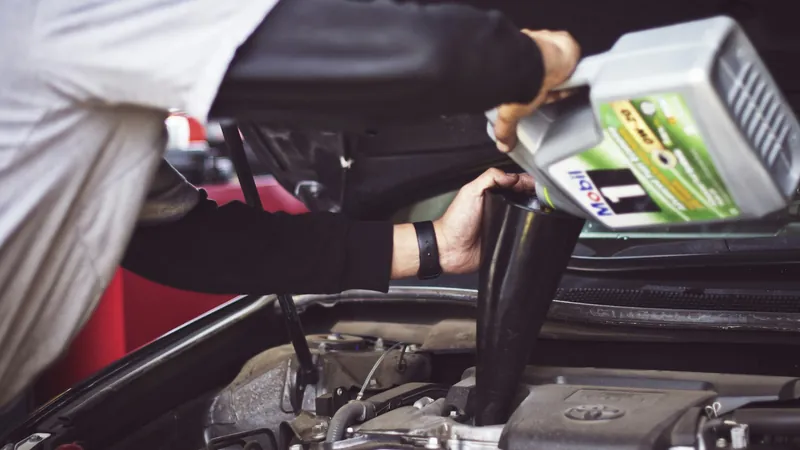
Change your oil as often as your owner's manual says, using the severe service interval if you drive mostly in traffic, on short trips, in heat or dust, and at least once a year even if you hardly drive. For many cars that works out somewhere between 5,000 and 10,000 km, and some on full synthetic oil go further, but the right number is the one for your engine. The old "every 5,000 km for everyone" rule isn't wrong for every car. It just isn't right for every car either.
The short version
- Your manual sets the interval, in kilometres and months. Whichever comes first.
- Severe driving means the shorter interval. Daily city traffic usually counts.
- At least once a year, however few kilometres you drive.
- Check the dipstick monthly. Some engines use oil between changes.
Start with the manual
Engines differ. Tolerances, turbochargers, oil capacity and the oil the maker designed for all change how long oil lasts. That's why AAA's advice is simply to always defer to the maintenance schedule in your owner's manual.
Look for three things in the maintenance section:
- The interval, such as "every 10,000 km or 6 months".
- A separate severe or special operating conditions schedule, usually with shorter intervals.
- The oil to use: the viscosity (for example 0W-20 or 5W-30) and the standard it must meet.
While your car is under warranty, sticking to that schedule and keeping the receipts also protects your claim if something goes wrong.
Normal or severe service?
This is where most drivers in big cities get it wrong. "Normal" in a manual usually means steady driving on open roads. AAA lists the conditions that call for the severe schedule:
- Mainly short trips, where the engine never fully warms up.
- Very hot, cold or dusty conditions.
- Sustained stop-and-go driving.
- Carrying heavy loads or towing.
A typical Metro Manila commute, crawling along EDSA in tropical heat, ticks at least two of those. Long idling with the aircon on works the engine without adding kilometres. If your car mostly lives in traffic, use the severe schedule. If you mostly cruise the expressways, the normal one may fit.
Months matter too
Oil ages even when the car doesn't move. Moisture and fuel from short trips build up in it, and its additives wear out over time. AAA notes that you should change the oil at least once a year even if you don't reach the kilometres. Cars that only come out on weekends are the ones that hit the months limit first.
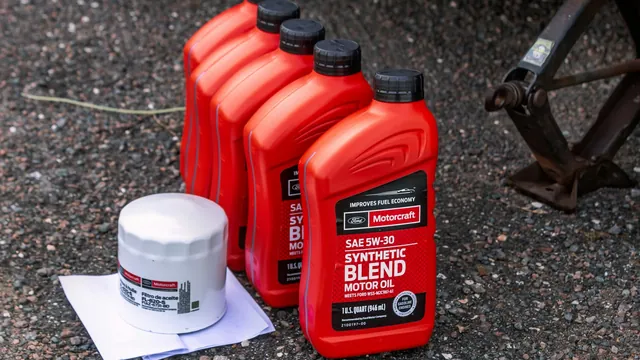
Synthetic, semi-synthetic or mineral?
- Mineral (conventional) oil is refined crude oil. It's the cheapest per change, and it generally needs changing more often.
- Semi-synthetic (synthetic blend) sits in the middle.
- Full synthetic holds up better to heat and lasts longer, which is why many newer engines specify it and set longer intervals.
The important part: the interval comes from your manual, not the bottle. Putting synthetic into an engine with a 5,000 km interval is fine and protects it well, but it doesn't by itself mean you can stretch the change. If your manual calls for synthetic, use synthetic. And always match the viscosity your manual specifies.
Oil-life monitors
Many newer cars have a monitor that estimates when the oil is due from how the engine has been used, such as temperatures and running time. It doesn't test the oil itself. AAA calls these monitors helpful but not always accurate, so use yours alongside the manual: if it asks for a change earlier than you expected, take it seriously, because it has probably seen a lot of short trips or heat. Two habits keep it honest: have it reset after every oil change, and still respect the months limit.
Common mistakes
- Using the normal schedule for severe driving. If you live in traffic, you're probably on the severe one.
- Going by kilometres only. A car that does 4,000 km a year still needs its yearly change.
- Never checking the level. AAA suggests checking about once a month. An engine that's low on oil can be damaged long before the next change is due.
- Wrong viscosity. Use the grade in your manual, not whatever the shop has on the shelf.
- Skipping the filter. The oil filter is normally changed with the oil.
- Not writing it down. Without the date and odometer of the last change, you're guessing when the next one is due.
Tips for checking your oil
- Park on level ground with the engine off and cooled for a few minutes.
- Pull the dipstick, wipe it, push it fully back in, then pull it out again and read the level between the low and high marks.
- Top up a little at a time with the right grade, then check again. Don't overfill.
- Look at the oil. Milky or foamy oil, or a level that drops quickly, is a reason to see a mechanic.
- Ask for the air filter to be checked at each oil change, as AAA suggests.
The oil change is the heart of most PMS schedules, so it's a good anchor for the other checks too.
Track it with VGarage
In VGarage, log each oil change as a service with the odometer, so the date and kilometres of the last change are always in the car's history. Then add a reminder:
- By date and odometer: for example every 5,000 km or 6 months, whichever your manual says, set to repeat.
- Due soon: it shows as due soon 14 days or 500 km ahead by default.
- A nudge: date reminders also notify you on your iPhone.
Odometer reminders work from the readings you log, so keep the odometer in your fill-ups. More on that in service reminders by odometer and the VGarage FAQ.
Track it with VGarage
VGarage keeps every fill-up, service and cost for all your cars on iPhone: scan the pump and the receipt, get service reminders by date or odometer, and see what each car really costs to run.