 VGarage

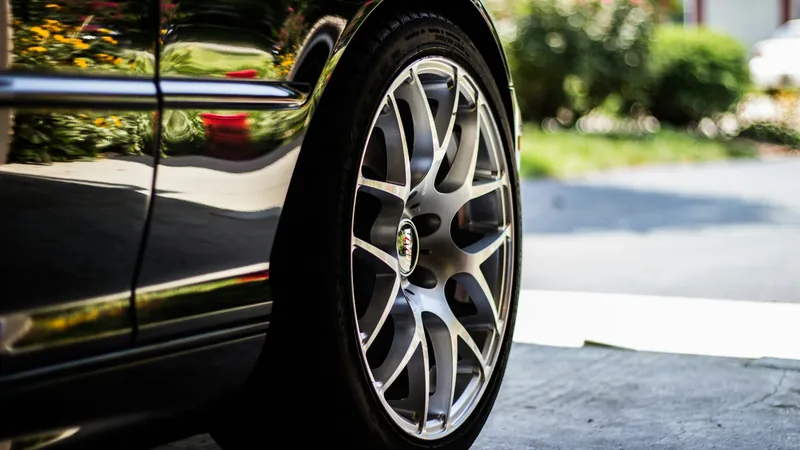
Check your tire pressure about once a month and before long trips, with the tires cold, and set it to the figure on the sticker in the driver's door jamb (or in your manual), not the number on the tire's sidewall. Have the tires rotated every 8,000 to 11,000 km (5,000 to 7,000 miles), or at every other oil change, unless your manual says otherwise. That's the whole routine. It takes ten minutes a month, and it pays you back in fuel, grip and tires that last longer.
The short version
- Monthly, cold, from the door sticker. Not the sidewall, which is the tire's maximum.
- Don't wait for the warning light. A pressure warning usually comes on only when a tire is well below where it should be.
- Rotate every 8,000 to 11,000 km, or as your manual says, to even out wear.
- Look at the tread each time. Uneven wear tells you something's off.
Find the right pressure
The right pressure comes from the car's maker, not the tire's. Michelin explains where to find it: usually on a sticker on the driver's door or door jamb, sometimes inside the fuel filler flap, and always in the owner's manual. Front and rear pressures can differ, and some cars list a higher pressure for a full load.
The number molded into the tire's sidewall is something else: the most that tire can safely hold. It isn't a target for your car. Pumping to it makes the ride harsh and the grip worse.
Pressure comes in psi, kPa or bar. 1 bar is about 14.5 psi, and 100 kPa is 1 bar. Gas station gauges usually show psi.
Check it cold
Air expands as tires warm up from driving, so a reading taken after a long drive looks higher than it really is. Michelin's advice is to check before driving, and never to let air out because of a reading taken after a drive.
- Best: at home in the morning, with your own gauge.
- At a station: pick one close to home, or wait a while after you arrive. If you have to check warm, never let air out; top up to the door figure if it's low, then check again when cold.
- Use a decent gauge. A small digital or dial gauge is cheap and more reliable than some forecourt hoses.
Why pressure matters
Tires lose air slowly on their own, about 1 psi a month according to Michelin, plus more through a slow puncture you can't see. Low pressure costs you in three ways:
- Fuel. A soft tire rolls with more resistance. Michelin estimates that running 1 bar (14 psi) low can cost about a full tank of fuel a year.
- Safety. The same shortfall can add around 11 m to braking on a wet road, and raises the risk of aquaplaning in heavy rain.
- Wear. Under-inflated tires wear on the outer edges; over-inflated ones wear in the middle.
If your fuel economy has been sliding, soft tires are one of the first things to check; see why fuel economy drops.
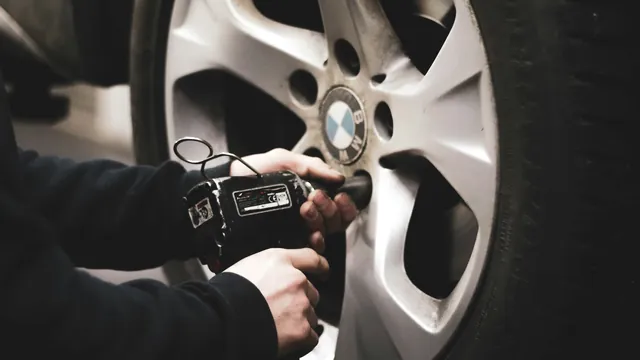
Rotation: when and how
Front tires usually wear faster, because they do most of the braking and steering, and on front-wheel drive cars they drive the car too. Rotation moves tires between positions so all four wear evenly and you replace them as a set, later.
Michelin recommends rotating every 5,000 to 7,000 miles (about 8,000 to 11,000 km) or every other oil change, with the car maker's guidance taking precedence, and sooner if you see uneven wear, drive mostly in stop-and-go traffic or carry heavy loads. The usual patterns:
- Front-wheel drive: fronts go straight to the rear; rears cross to the front.
- Rear-wheel drive: rears go straight to the front; fronts cross to the rear.
- All-wheel and four-wheel drive: usually a criss-cross, unless the maker says otherwise.
- Directional tires (with an arrow on the sidewall) stay on the same side and only swap front to rear.
- Different sizes front and rear often can't be rotated front to rear at all.
Many PMS schedules include a rotation; see car maintenance schedule. Ask for the pressures to be set after the swap, since front and rear figures may differ.
Read the tread
- Wear bars: small raised bars sit in the grooves. When the tread is level with them, the tire is worn out.
- Replace earlier for rain: AAA suggests replacing at 4/32 inch (about 3 mm) of tread, well before the wear bars, because wet grip falls off as tread wears.
- Uneven wear: one edge worn more than the other often means an alignment problem; worn in the centre or on both edges points to pressure.
- Damage: bulges, cuts and cracks in the sidewall mean the tire should be checked right away.
Common mistakes
- Using the sidewall number. It's the maximum, not the target.
- Checking right after a drive and letting air out. The cold reading is the one that counts.
- Relying on the warning light. It's a last warning, not a monthly check.
- Forgetting the spare. Check it now and then, so it's ready when you need it.
- Skipping rotations and then replacing two tires early instead of four tires later.
Track it with VGarage
In VGarage, set two reminders: a date reminder to check the pressure every month, which notifies you on your iPhone, and an odometer reminder for rotation every 10,000 km or whatever your manual says, set to repeat. Log rotations as services with the odometer, and new tires as a cost under the tires category, so you know how many kilometres each set lasted.
Keeping the odometer in your fill-ups keeps odometer reminders on time, and your fuel economy trend shows when something like soft tires starts to cost you. More in the VGarage FAQ and in service reminders by odometer.
Track it with VGarage
VGarage keeps every fill-up, service and cost for all your cars on iPhone: scan the pump and the receipt, get service reminders by date or odometer, and see what each car really costs to run.